

In the context of rapidly advancing AI, translation has become faster and more accessible than ever before. This raises a common question among young people: Is studying Japanese Language still necessary in the future? From the perspective of East Asia University of Technology (EAUT), the real value does not lie in what AI can do, but in the human ability to communicate, understand, and apply language effectively in real-world contexts.
So, is Japanese Language still a worthwhile major to pursue in 2026? The answer will be clarified by EAUT right below.

I. What is the Japanese Language major?
The Japanese Language major focuses on in-depth Japanese proficiency while equipping learners with the ability to apply the language across various fields such as economics, commerce, tourism, education, and technology.
At EAUT, this program goes beyond simply “learning a language” and aims to train high-quality human resources capable of working in international environments, especially with Japanese enterprises.
Students will build a strong foundation through:
- Writing systems (Hiragana, Katakana, Kanji)
- Grammar and honorific language in communication and work
- Listening – speaking – reading – writing skills aligned with academic and practical standards
In parallel, students will study modules such as:
- Japanese culture, people, and business environment
- Business Japanese
- Translation and interpretation skills
- Skills for working in multinational environments
With a well-structured training roadmap, graduates can achieve proficiency levels from N3 to N1 (JLPT), meeting the demands of both domestic and international labor markets.
II. Why is Japanese Language still a sustainable choice?
1. Continuous growth of Japanese investment

Japan has consistently been one of the leading countries in foreign direct investment (FDI) in Vietnam. Japanese businesses are not only concentrated in major cities but are also expanding across many provinces, creating an increasingly widespread employment network.
Along with this is the rising demand for Japanese-speaking personnel—not only those who “know the language” but also those who understand Japanese working styles, culture, and mindset. This is the key factor that gives language learners a competitive advantage in the labor market.
From an educational perspective, this is a positive and long-term signal for the Japanese Language major, as workforce demand is not temporary but steadily growing alongside the cooperation trend between the two countries.
2. Expanding career opportunities in Japan
Japan is entering a phase of rapid population aging, leading to labor shortages in many sectors, especially in positions requiring foreign language proficiency and international communication. This is no longer a short-term trend but a long-term challenge for the Japanese economy.
Well-trained Japanese Language graduates are becoming highly sought-after candidates. Beyond simply “knowing the language,” Japanese companies increasingly look for individuals who can use the language flexibly in work and real-life communication.
Students majoring in Japanese Language can take on various roles such as:
- Translator or interpreter in enterprises
- Assistant or secretary using Japanese
- Administrative or external relations staff in Japanese companies
- Japanese language teaching and training
A key highlight of these roles is the high demand for expression skills, contextual understanding, and cultural sensitivity in communication—core elements of language-related professions.
Beyond job opportunities, working in Japan helps learners develop professionalism, attention to detail in communication, and adaptability in multicultural environments. These are essential foundations for long-term career growth in language and international fields.
See more: What do Japanese Language students study? What careers can they pursue?
3. An irreplaceable role in the AI era

The development of AI helps reduce language barriers, but it cannot fully replace the role of humans in real-life communication.
In the Japanese Language field, using a language is not just about “accurate translation,” but more importantly about conveying the right meaning, tone, and cultural context. This is especially crucial when working with Japanese partners, where subtlety, standards, and context are highly valued.
In reality, language-related jobs such as translation, interpretation, external relations assistance, Japanese-speaking administration, and language teaching all require learners to:
- Deeply understand the meaning behind words
- Master Japanese culture, working style, and communication norms
- Flexibly adjust expression according to specific situations
These are experiential, context-based, and highly nuanced competencies—areas where AI still struggles to fully replace human capabilities.
Therefore, in the digital era, Japanese Language learners are not just people who “know a language,” but those who can connect, communicate, and build mutual understanding across cultures.
4. Attractive income with growth potential
One of the key attractions of the Japanese Language major is its competitive income and clear growth pathway based on capability.
Specifically:
- N3 level: approximately 10 – 15 million VND/month
- N2 level: approximately 15 – 25 million VND/month
- N1 level: from 30 million VND/month and above
For positions requiring high expertise or direct work with Japanese partners, income can be significantly higher, especially when working in Japan.
In addition, the JLPT certificate is widely recognized and holds long-term value. It is not only a “ticket” to job opportunities but also a foundation for sustainable career development in international environments.
III. Is Japanese Language difficult to learn?

IV. Advantages of studying Japanese Language at EAUT
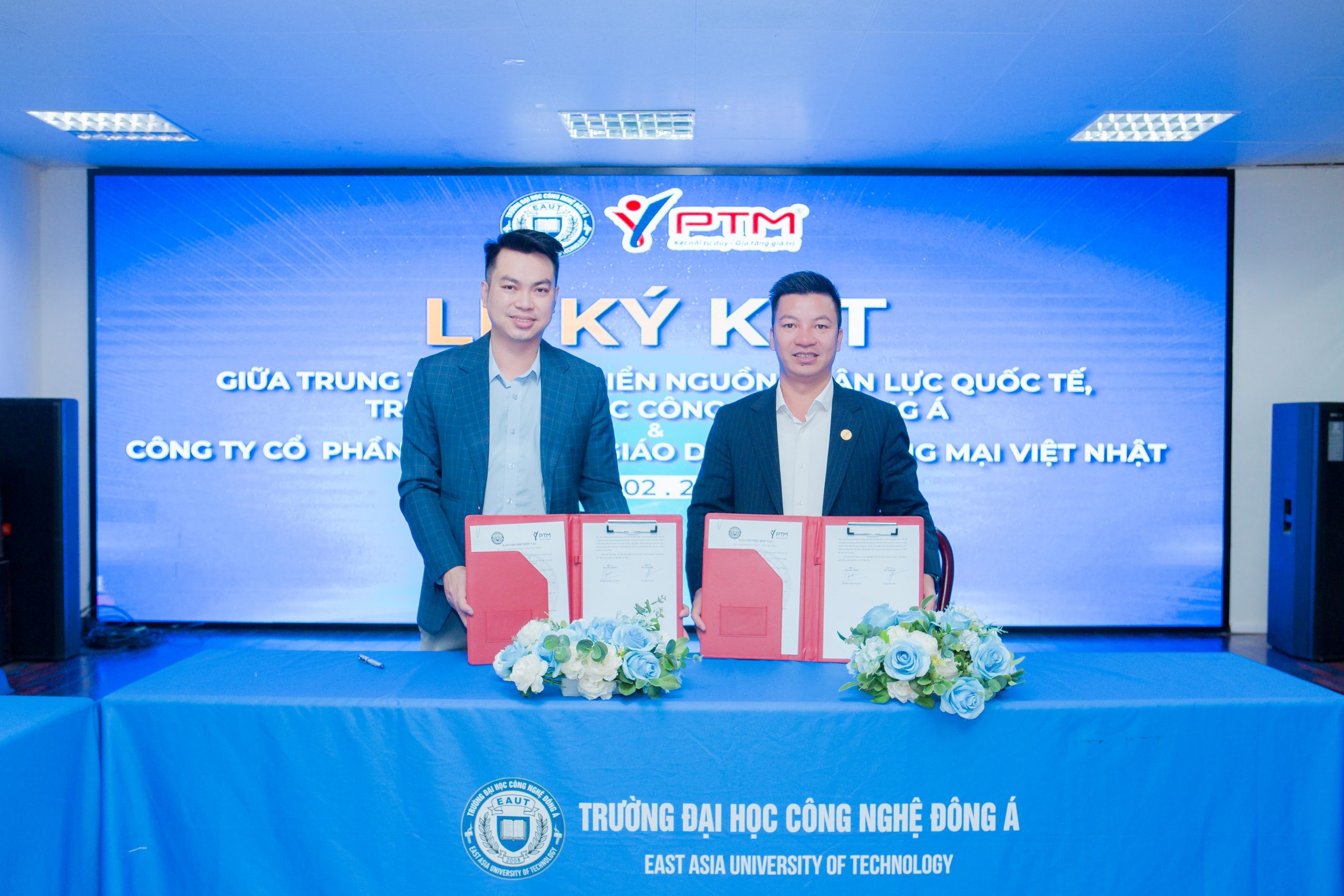
At East Asia University of Technology, the Japanese Language major is developed with an application-oriented, practice-focused, and industry-connected approach to bridge the gap between training and real-world recruitment needs.
Unlike traditional language learning methods that focus heavily on theory, EAUT’s program emphasizes using Japanese as a working tool throughout the learning process. From the early years, students are clearly oriented toward career pathways, allowing them to choose suitable directions such as translation and interpretation, business Japanese, or working in Japanese corporate environments.
One of the highlights is that students have opportunities to:
- Participate in internships at Japanese enterprises while still studying
- Experience internship programs, including paid internships
- Access real working environments that require frequent use of Japanese
Early exposure to real-world environments helps students not only improve language proficiency but also develop professional working styles and communication skills in multicultural settings—key factors when working with Japanese partners.
In particular, the university actively expands international partnerships, creating opportunities for students to work in Japan after graduation. This is not only a career opportunity but also a stepping stone for long-term development in a global environment.
With a dynamic learning environment that emphasizes skills and practical experience, Japanese Language students at EAUT go beyond simply being “proficient in the language” to becoming confident, adaptable, and capable of creating value in international environments right after graduation.
In the AI era, human value lies not in “knowing a language,” but in the ability to use language to connect, understand, and create value in work. Therefore, the Japanese Language major is far from outdated—it is opening up new opportunities for young people with clear direction and strong preparation.
If you are looking for a highly applicable major with broad job opportunities and long-term development potential, Japanese Language is a worthwhile choice to consider in 2026.
Trường Đại Học Công Nghệ Đông Á
Đường Phan Tây Nhạc, Phường Xuân Phương, Hà Nội.
Hotline: 0243.555.2008 hoặc 024.2236.5888
Email: tuyensinh@eaut.edu.vn
Fanpage: https://www.facebook.com/dhcnDongA/