


“Do you just end up repairing air conditioners after studying this major?” This is a common question many students encounter when exploring Refrigeration and Air Conditioning Engineering. In the minds of many, this field is associated with technicians installing and repairing air conditioners at homes—a job that can be physically demanding and not particularly prominent. However, the reality is quite different. Repairing air conditioners is only a very small part of the overall picture of this field. Behind these familiar devices lies a complex, modern engineering discipline that plays a vital role in both daily life and industrial production. When properly understood, you will find that this is a field worth considering far more than you might have previously thought.
Why is Refrigeration and Air Conditioning Engineering often misunderstood?
One of the main reasons comes from the widespread image of air conditioner repair technicians in everyday life. Almost every household has called a technician to install or fix equipment, which unintentionally leads to the assumption that this is the primary job of the entire field.
In addition, information about this field has not been fully communicated. Many students have not had the opportunity to learn about the role of refrigeration engineers or HVAC systems in large-scale projects.
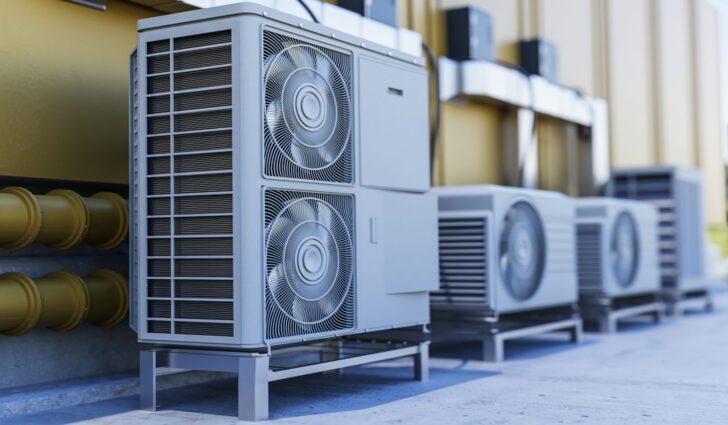
Moreover, many introductions to the field remain general and lack detailed descriptions of real-world tasks. This makes it difficult for readers to clearly visualize career pathways and can easily lead to misunderstandings.
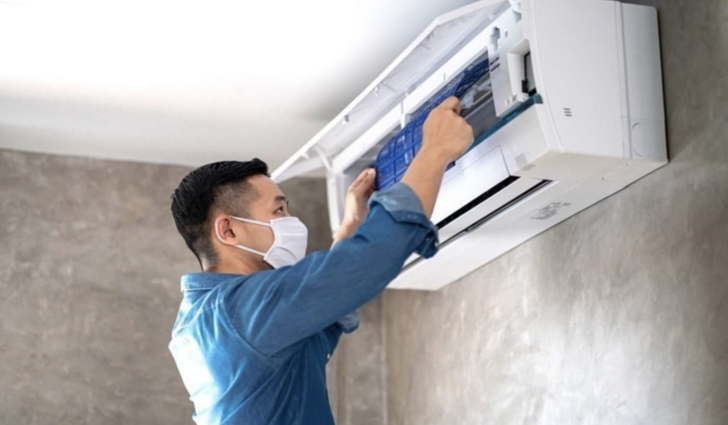
Repairing air conditioners is just the beginning: In reality, repair work is often an entry-level position for newcomers or students working part-time to gain experience. This stage helps learners become familiar with equipment, understand operating principles, and develop practical skills.
However, with proper training, you can go much further. Refrigeration and Air Conditioning Engineering offers many specialized career paths with high technical requirements and sustainable development opportunities.
What do Refrigeration and Air Conditioning engineers do?
In a professional working environment, the role of an engineer goes far beyond repair work and expands into various areas.
Air conditioning system design
This is one of the most important tasks. Engineers calculate and design air conditioning systems for facilities such as shopping malls, hotels, hospitals, and office buildings.
The work includes determining appropriate capacity, calculating airflow, and optimizing energy efficiency. This field requires strong technical knowledge and proficiency in engineering software.
Implementation and construction supervision
After the design phase, engineers participate in on-site project implementation. They coordinate with related departments, supervise installation, and ensure systems operate according to technical drawings. This stage involves a highly professional working environment, often associated with large-scale projects.
System operation in large facilities
Many engineers work directly in high-rise buildings, factories, or airports to ensure air conditioning and cooling systems operate continuously 24/7. Even a minor issue can affect the entire system, so this role requires precision and a strong sense of responsibility.
Maintenance and system optimization
Beyond repairing faults, engineers also perform routine maintenance, upgrades, and system optimization to save energy and extend equipment lifespan. This is especially important as businesses increasingly focus on operational efficiency and cost management.
Is this field becoming “outdated”?
The answer is no—on the contrary, this field is closely tied to many modern technology trends such as smart buildings, energy-efficient air conditioning systems, and IoT applications in management and operations.
In the context of rapid urbanization and industrialization, the demand for temperature control, air quality, and energy systems continues to grow. Especially in areas such as data centers, hospitals, and manufacturing plants, air conditioning and cooling systems are indispensable.
What should you study to become an engineer rather than just “a repair technician”?
To develop long-term in this field, students need to be equipped with both knowledge and skills. First is the foundation in thermodynamics, refrigeration, electrical systems, and control engineering. These are essential for understanding and designing complex systems. Next are practical skills, including installation, operation, and the use of specialized equipment, which help students adapt to real working environments.
Most importantly is the engineering mindset: the ability to read technical drawings, analyze systems, and solve problems. This is what distinguishes someone who “knows how to repair” from someone who can “master the system.”

Will this field be replaced by AI?
In the age of technology, many professions face the risk of automation. However, in Refrigeration and Air Conditioning Engineering, AI mainly plays a supporting role. Smart systems can assist in monitoring, alerting, and optimizing operations, but human involvement is still essential for installation, inspection, and handling real-world issues. This makes the field one of the most stable and difficult to fully replace.
See more: Is Refrigeration and Air Conditioning Engineering easy to find a job?
Refrigeration and Air Conditioning Engineering is not simply about repairing equipment as many people assume. It is a broad technical field closely associated with modern infrastructure and plays a crucial role in everyday life.Eastern Asia University of Technology
Phan Tay Nhac Street, Xuan Phuong Ward, Hanoi.
Hotline: 0243.555.2008 or 024.2236.5888
Email: [tuyensinh@eaut.edu.vn](mailto:tuyensinh@eaut.edu.vn)
Fanpage: [https://www.facebook.com/dhcnDongA/](https://www.facebook.com/dhcnDongA/)